There are places you visit for the first time as an adult, yet somewhere deep inside, they feel as though you already know them. Perhaps because you have come across them in old memories, photographs, or stories you heard long ago.
Psara feels like that to me. I had visited the island when I was little and, ever since, I kept telling myself that one day I would go back. Years went by, that “one day” kept being postponed, and Psara remained somewhere at the back of my mind. Until the time finally came to return. And there is something strange about going back to a place you knew as a child. Some things feel familiar, even when you cannot quite explain why. Others look as though you are seeing them for the very first time. Only this time, I see them differently. With my camera in my hands, my lenses and my phone, I have learned to notice the little details more. The light falling on the rocks, the sea changing colour, a road, a door, a church, a landscape that I might once have passed without giving it much thought.
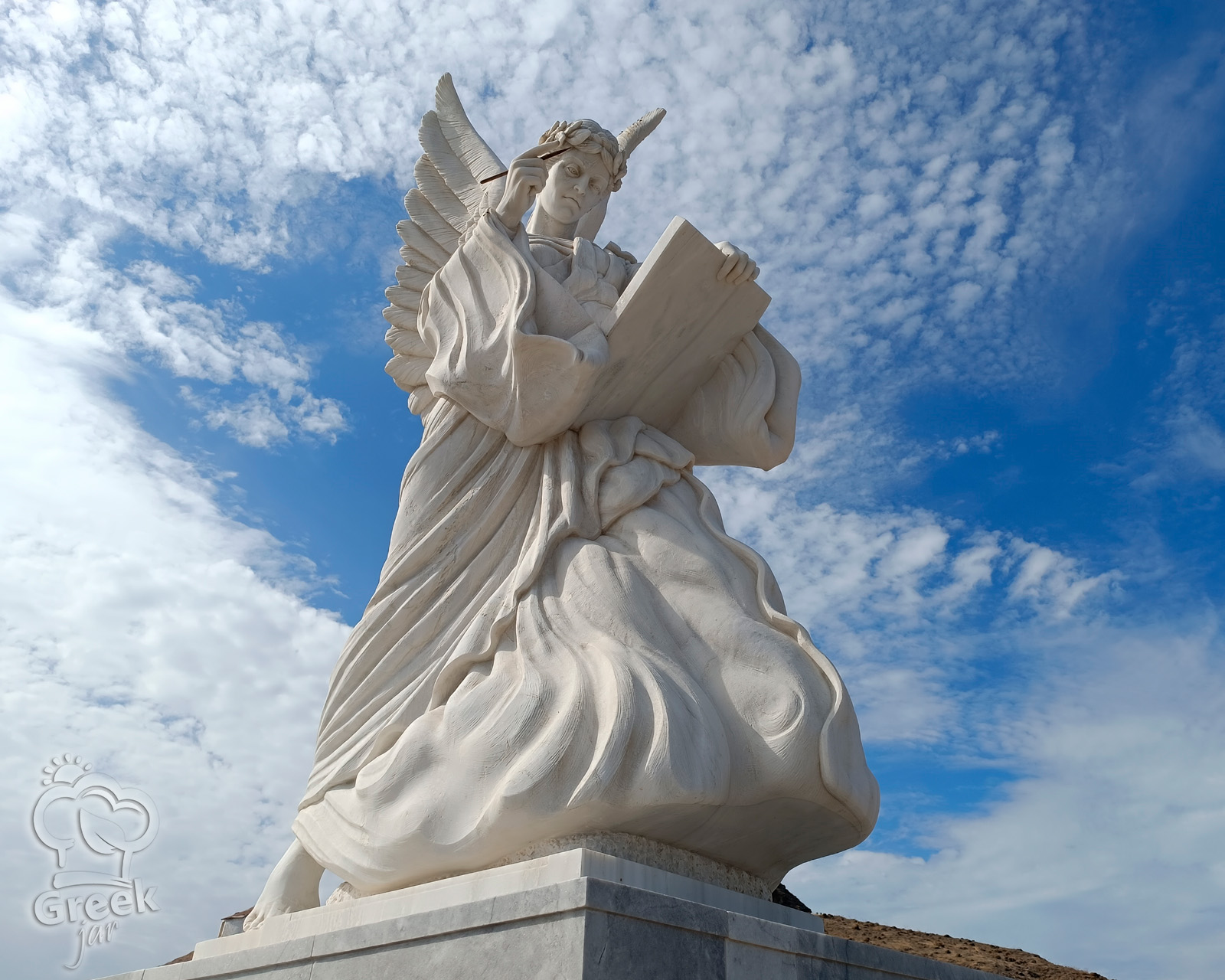
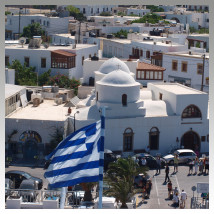
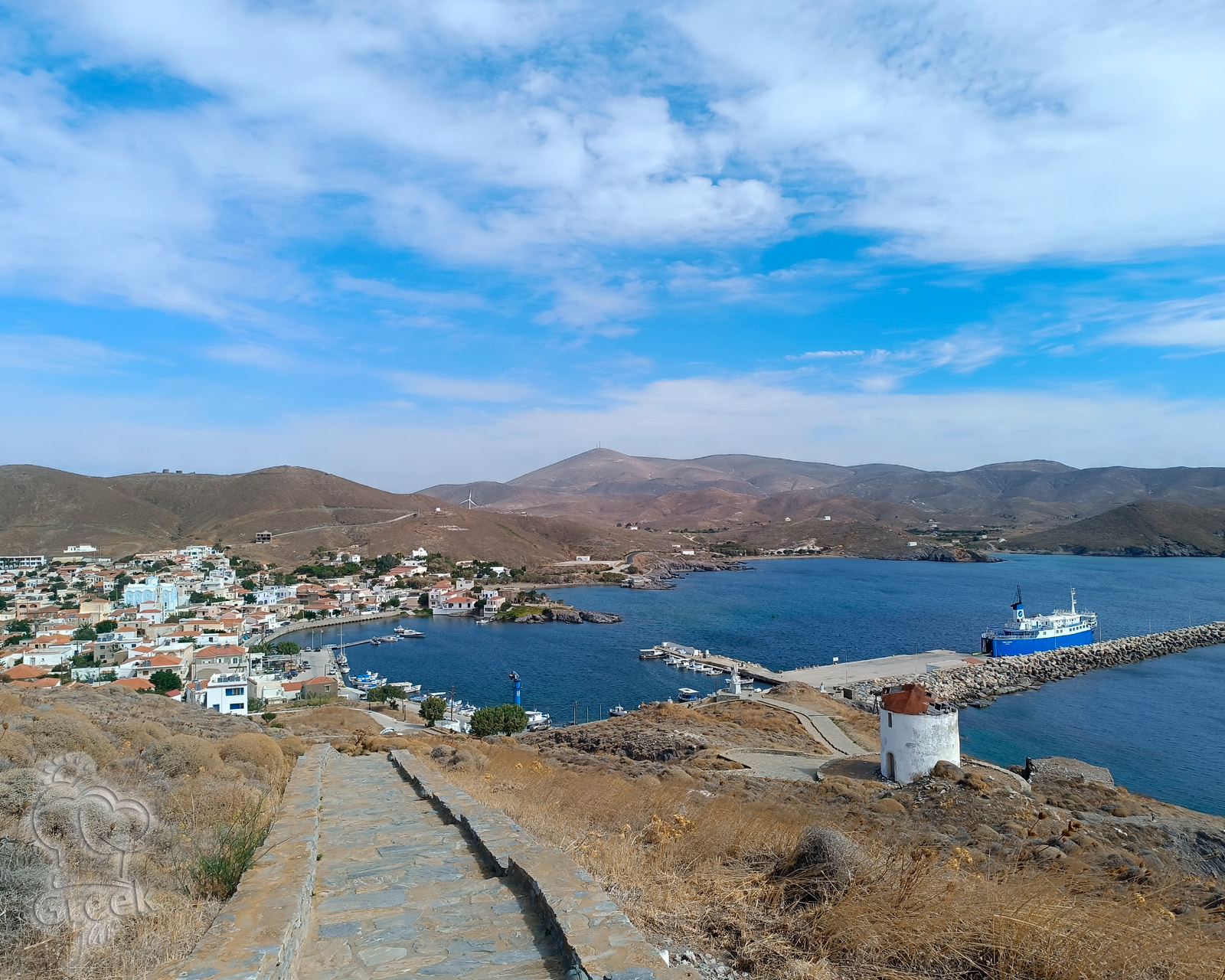
And that is how I begin to get to know Psara all over again. From the moment you arrive, before you have even set foot on shore, the island begins to reveal its history. As you approach the port, the graffiti depicting figures of the freedom fighters immediately catches your eye and, almost without you realizing it, sets the tone for the place. A little further on, the flag of Psara bearing the words “Freedom or Death” reminds you that here, history is not found only in books and monuments. It is part of the very identity of the island. And then, as you make your way towards Mavri Rachi, you encounter Glory. The imposing marble statue, standing approximately four metres tall, is a powerful first image of remembrance and honour. It is the first thing you see as you make your way up towards this historic site, almost preparing you for what you are about to encounter. Because in Psara, the beauty of the landscape exists side by side with the weight of its history.
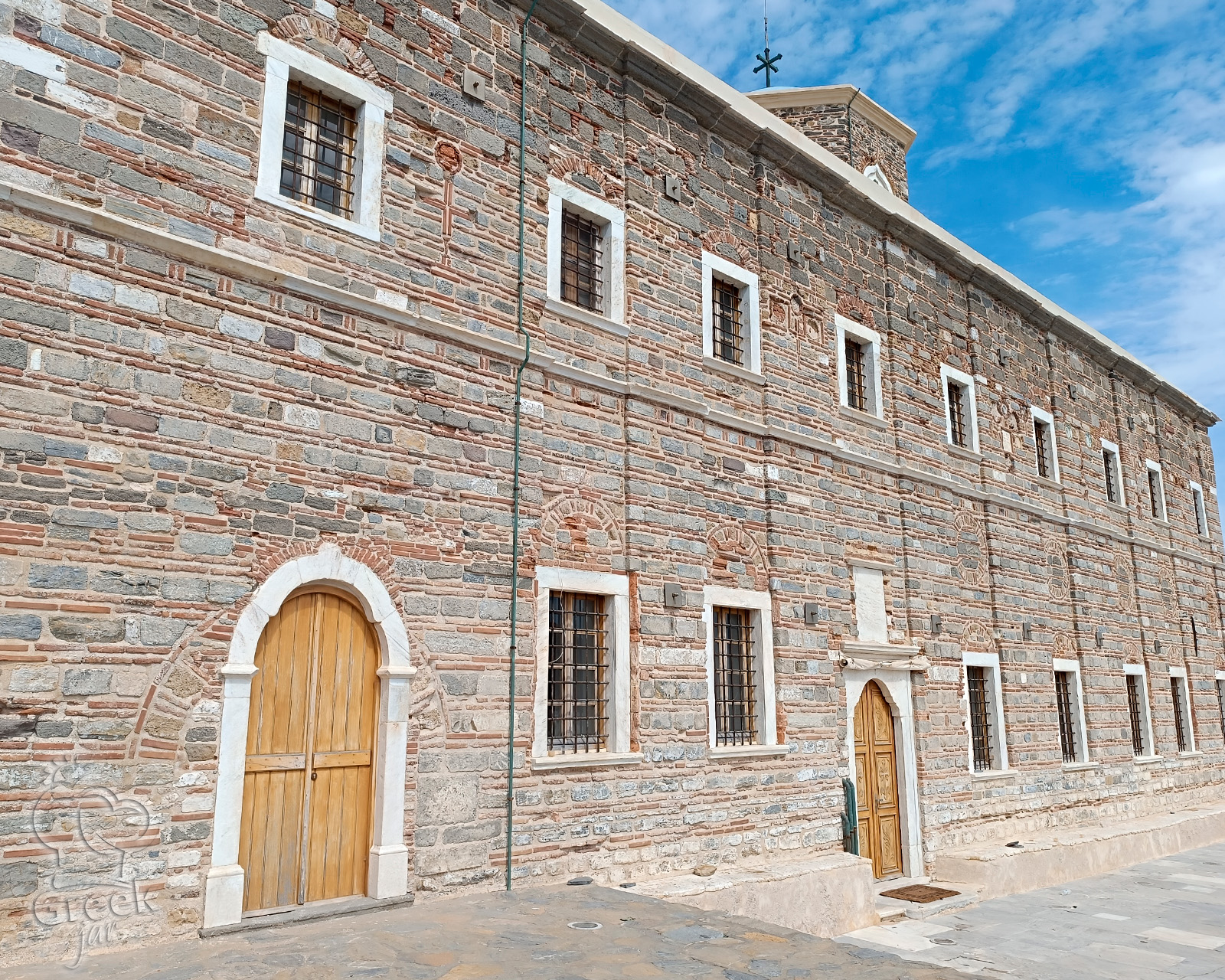
Psara may be small in size, but its place in Greek history is much greater. The people of Psara had a long naval tradition, and the island played an important role in the Greek War of Independence of 1821. The ships and sailors of Psara took part in the struggle, and the island became connected with important moments in Greek naval history. And then came 1824. The destruction of Psara is one of the most tragic chapters of the Greek War of Independence. The settlement was destroyed, and a large part of the population was either killed or forced to flee. When you explore the island today, it is difficult not to think about this history. Not, however, in the way you read it in a book. It is there, in the landscape, at Mavri Rachi, in the places of remembrance and the monuments you encounter as you walk around. And somewhere between the sea and the rocky landscape, you begin to realize that this small island has carried much more than its size might suggest.
The settlement is small and has that simplicity I love about islands that do not try to impress. Houses in different shades, little streets, churches, courtyards, and the sea appearing again and again between the buildings. There is no need to have a specific plan. You simply walk, look around, and let the island reveal its little details to you. An old door, a window, a fishing boat, a wall marked by the passing of time. And, of course, you take photographs. Perhaps that is one of the most beautiful things about travelling. Returning to a place with a different perspective and discovering images you might never have noticed before.
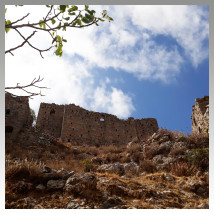
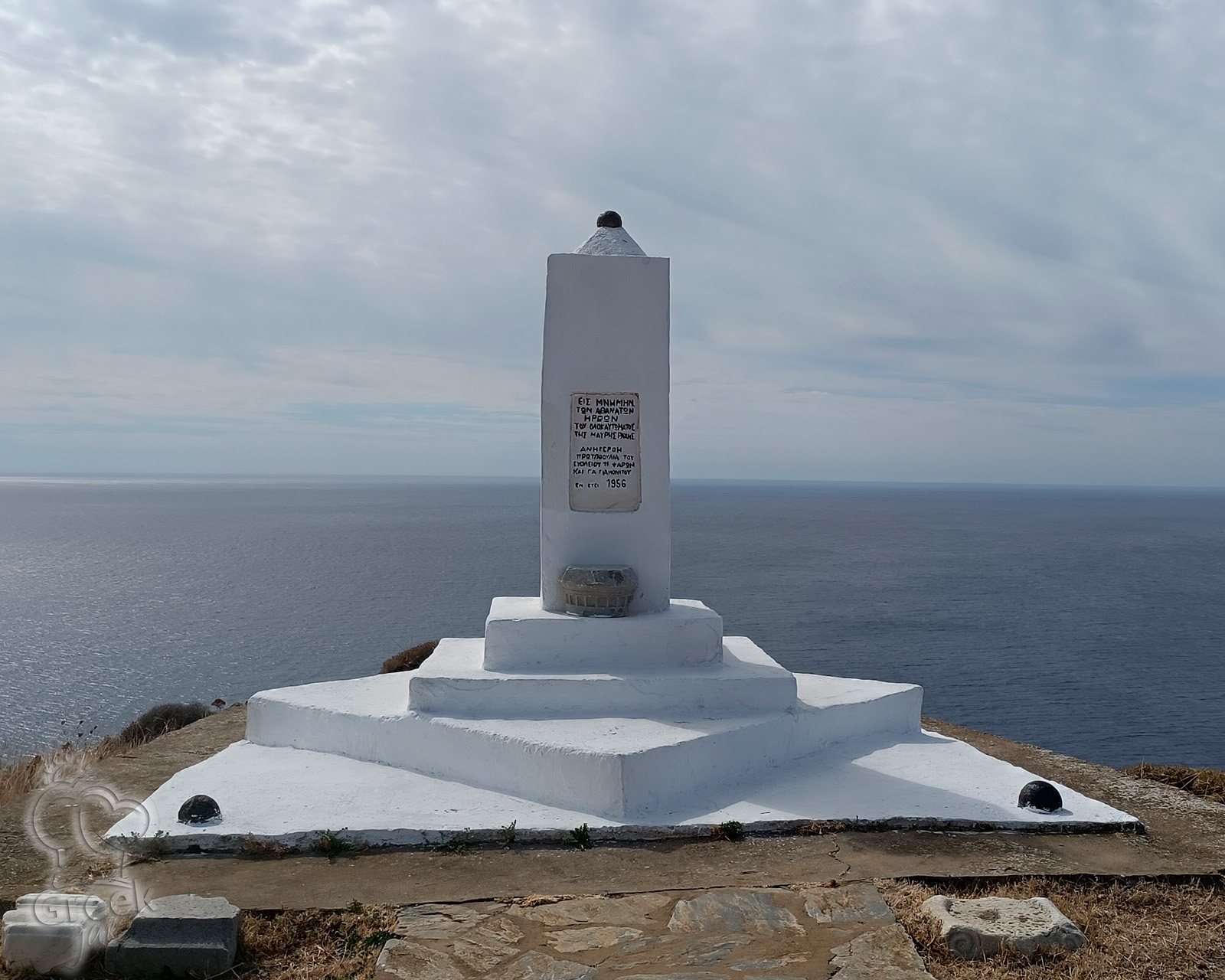
One of the places you cannot really get to know Psara without visiting is Mavri Rachi. The site is closely connected with the destruction of 1824 and the resistance of the people of Psara. Today, it is an important place of remembrance, with a view that opens out towards the Aegean and the Antipsara island. You stand there and look out at the sea. And it is one of those moments that do not need many words. Because the landscape is beautiful, but knowing what happened here makes you see it differently. There are, of course, many other places worth discovering on the island. Among them are the Church of Saint Nicholas and the site where the house of Konstantinos Kanaris once stood, the Monastery of the Dormition of the Virgin Mary in the north of the island, the archaeological site at Archontiki, with the remains of a Mycenaean settlement and cemetery, as well as the Spitalia, the old 18th-century quarantine facilities, which have since been restored and now operate as a place for dining.
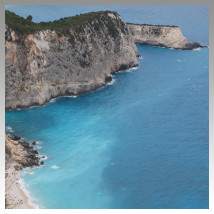
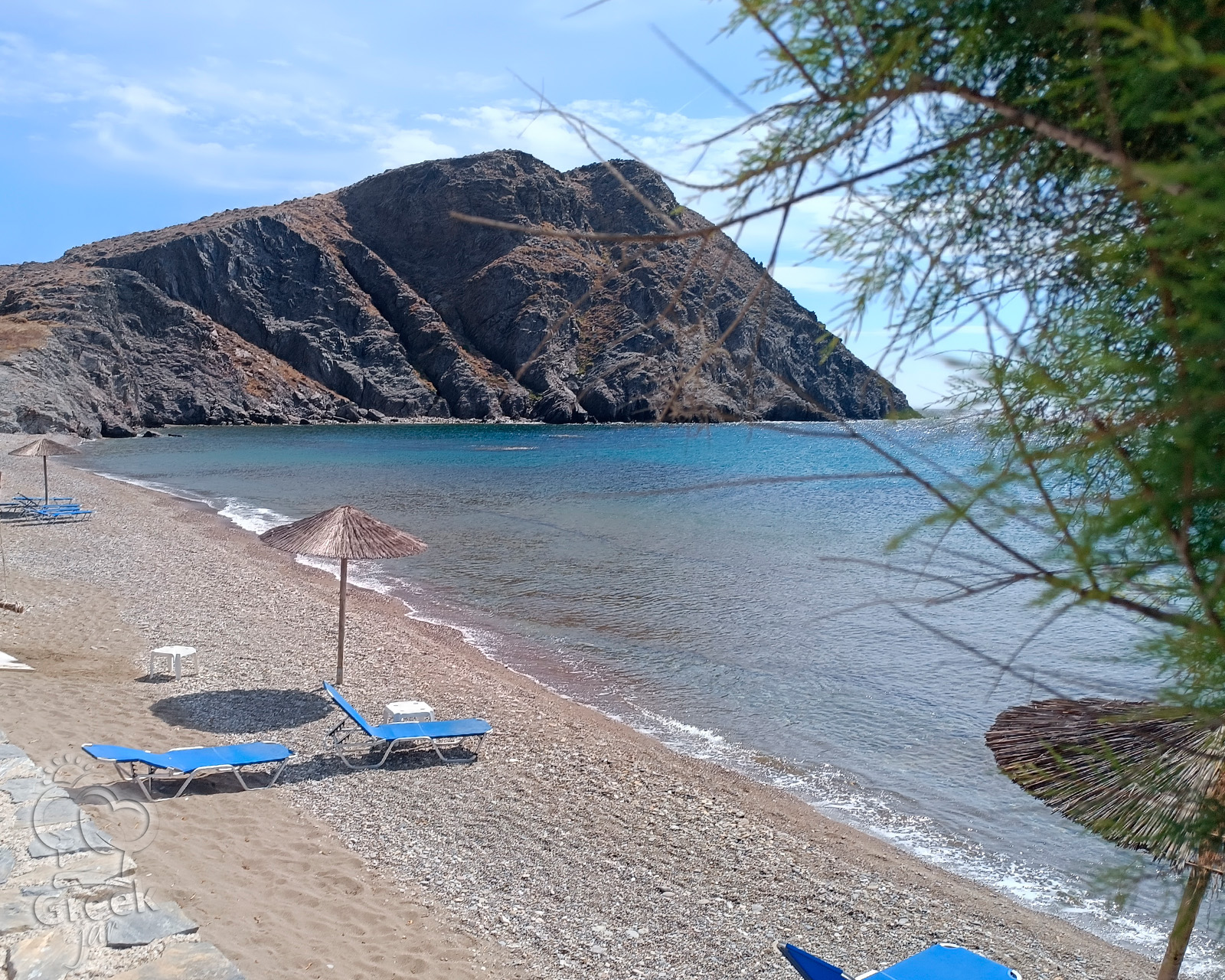
Psara has a simple and distinctive landscape. It is not the lush green island you might expect to find somewhere in the Aegean. Here, rocks, low vegetation, coastline and sea dominate the scenery. And that is exactly what gives the island its character. There are beautiful beaches and little coves to discover, as well as routes where the main attraction is the view and the landscape itself. What always captivates me is the Aegean light. The way it can completely transform the appearance of a place within just a few hours, the way a rock turns golden in the afternoon, and how an ordinary view can suddenly become a photograph you want to keep.
Everything feels quieter here. Not silent, but you can feel that the island does not hurry. You can walk, swim, sit somewhere and look out at the sea, explore the settlement, or follow a road without knowing where it will take you. And somehow, you begin to fall into the rhythm of the island. Psara is not only its history, as important as that history may be. It is also its present. Its people, its houses, its tavernas and cafés, the sea, the churches, the little scenes that create a place that continues to live and evolve.
Perhaps there is something very beautiful about returning to certain places. Going back to somewhere you knew once and realizing that, while the place may have changed, you have changed too. When I was a child, Psara was simply an island I had visited once. Today, I look at it through my camera lens, searching for little images, stories and details that I want to keep. And perhaps that is the most beautiful part of travelling. Not only discovering a new place, but being able to discover it all over again. Psara, once again. This time, with a different perspective. A fuller one…